
Free septic record help
Find your
septic records.
Know your next step.
We search official sources, contact the right office, and explain the records we find—free. If field work is next, your request can reach relevant local professionals.
Free research, records and explanation. Agency fees only with approval.Septic records.Clear answers.Prefer to search public records yourself?
Same ground.
A clearer picture.
Our process
The portal is only
the beginning.
When a record isn’t easy to find, we check the available sources and contact the responsible office. You receive what we found, what remains unknown, and a useful next step.
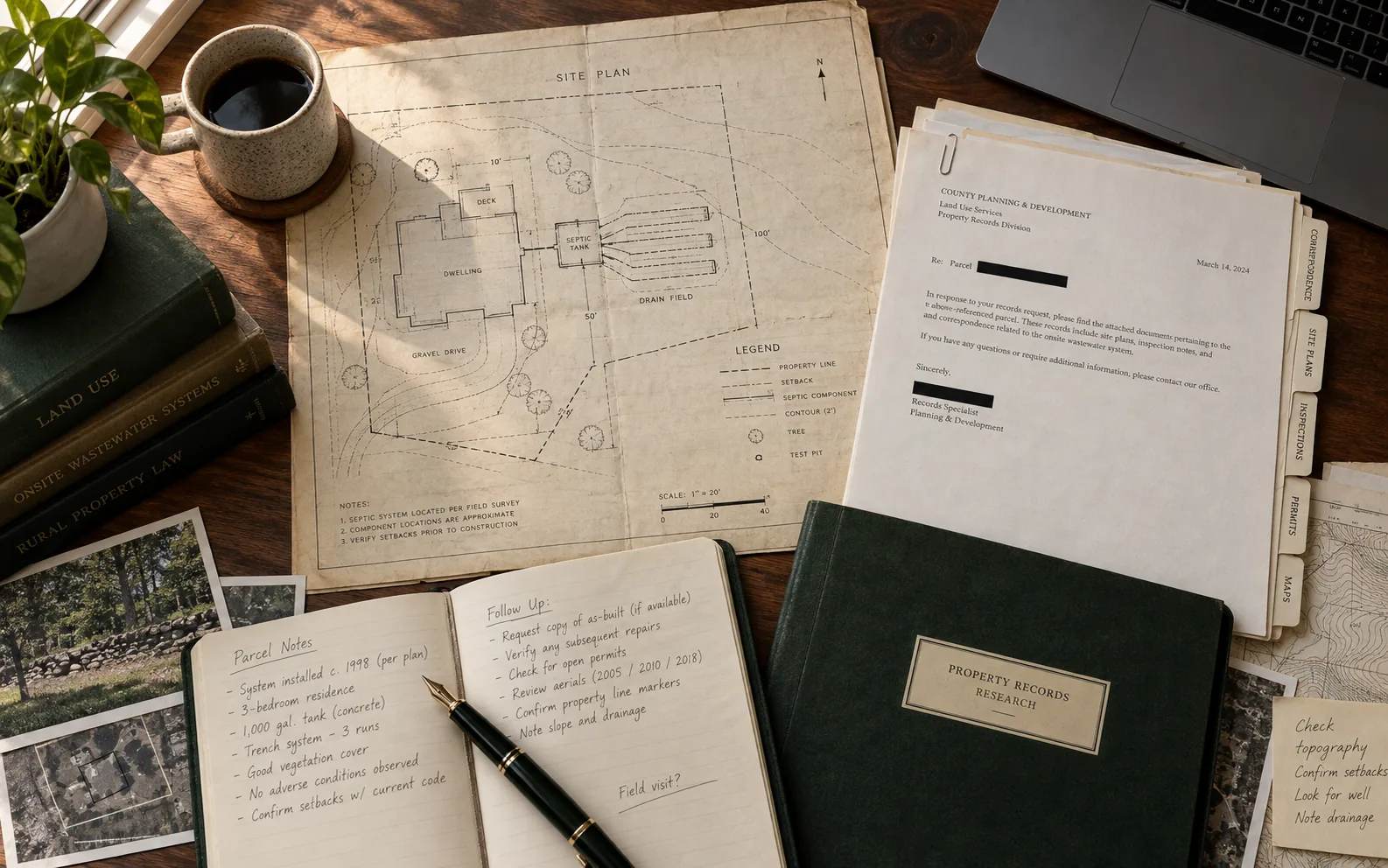
- 01
Search online
We search public systems and county portals.
- 02
Find the custodian
When it’s not online, we identify and contact the right office.
- 03
Follow through
We send a focused request to the responsible public office and track the response.
- 04
Explain the evidence
We translate the source into a clear, practical next step.
A real example
From “no results”
to a useful answer.
The county portal showed no records for this property. The paper trail continued offline.
Read the complete investigation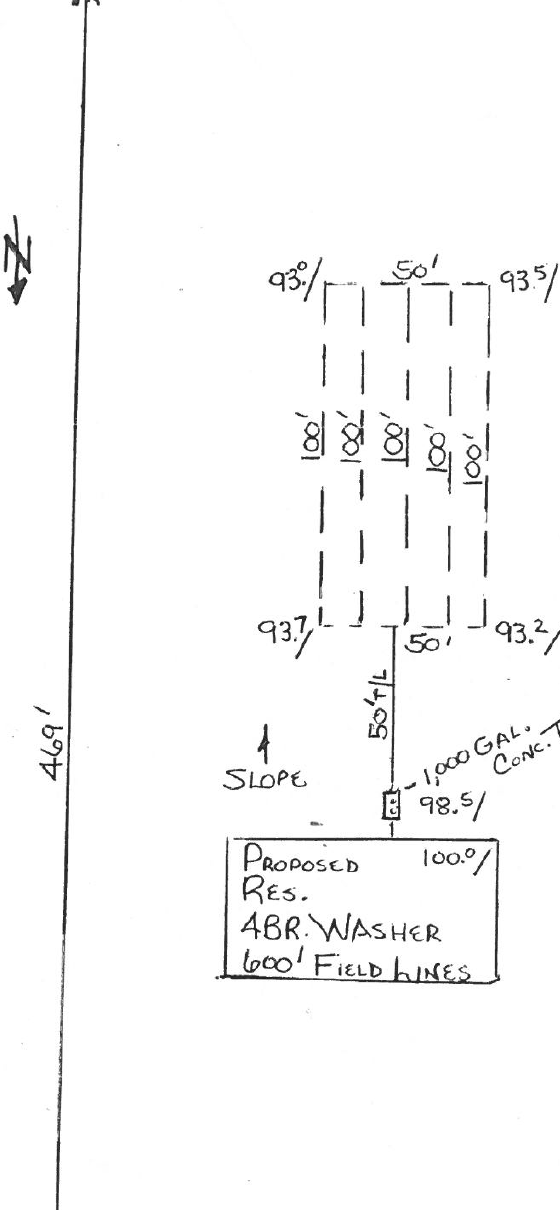
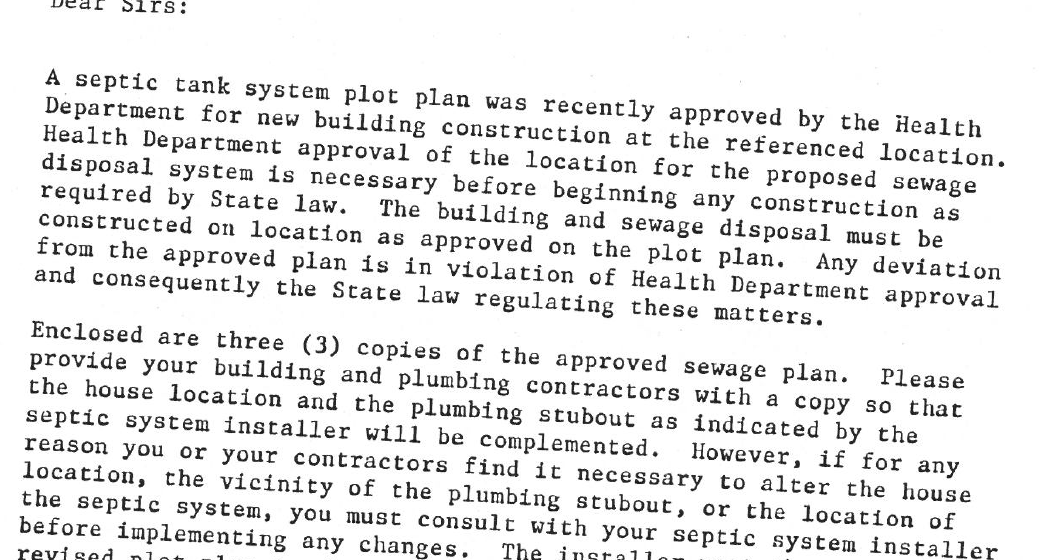
- Property matched
- Address and parcel aligned with the returned file.
- Historical permit recovered
- The original source remains attached to the explanation.
- Layout clues explained
- Tank, field, bedrooms, and limits are separated clearly.
Context matters
What the file proves—
and what it doesn’t.
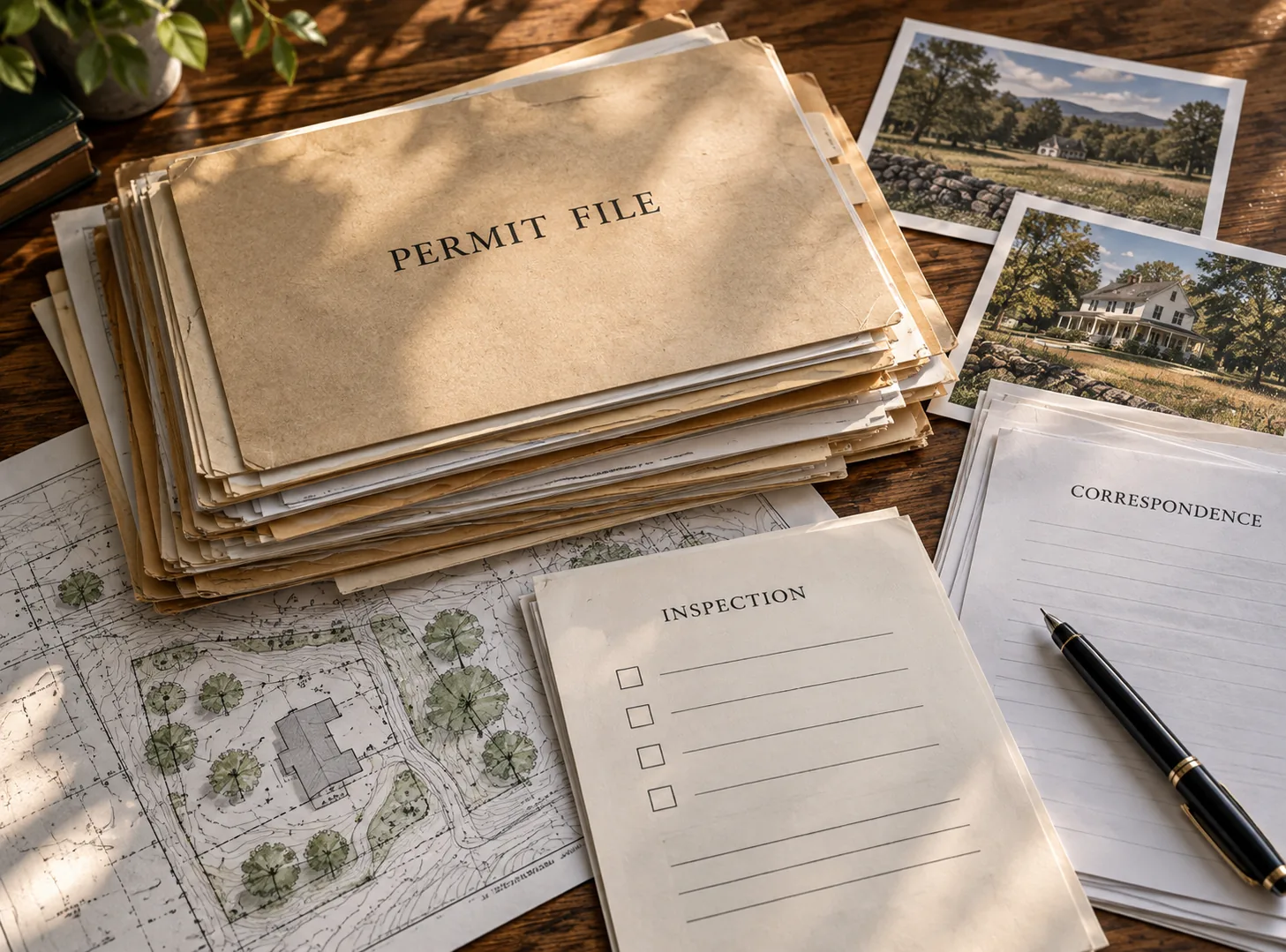
A septic file can confirm what was approved, how the system was designed, and where it was intended to be. It can also reveal useful details about later changes and inspections.
Current condition is not confirmed. The historical file is not a current inspection, engineering opinion, or new approval.
Read the guide to septic recordsYour next step
Start with the question you actually have.
Different properties. Different questions. The same methodical approach.
Self-serve alternative
Research it yourself.
Use our source-backed tools if you would rather trace the route yourself. Your address is not stored by SepticPath.
Find the public record path
Enter the property address to identify the county and likely official record source.
Property record route
When a direct file exists: The original record still opens on the government or county site. Otherwise the official route may require a search, form, call, login, or request there; this page keeps your place for 30 days.
Office contact and search steps
What happened?
Your answer stays on this device for 30 days so the next visit can continue from here.
Add the records you found.
Add a downloaded file, phone screenshot, or text copied from the official page or email. Each source updates one shared checklist and shows conflicts between records.
Add the first record
Or paste text from the official page or email
PDF, TXT, PNG, or JPG; maximum 10 MB per source. Originals and OCR images are never saved. The extracted summary stays only in this tab unless you choose “Save session for later.”
Find septic records by address. Find the record route by county name. Have a permit, drawing, letter, or screenshot?
More research routes and completed casesHigh-demand record workflows, kept out of the main path until you need them.Explore all five real record-help cases
One request. A complete research path. Start with the routes that already do more than explain; remaining coverage is labeled as a starting-point route.
Search by county insteadUse this when you do not have the full property address.Browse 327 county paths
Search by county or state.
Open the local permit, records request, parcel, as-built, or inspection-letter route.
More filters
Popular county routes
No matching county route yet. Try the state name, a nearby county, or open the state records lookup.
Back from the official site? Keep the property details together and continue with the next available route.

Clear records. Brighter decisions.