TN homeowner guide

Tennessee Septic Records Checklist

Live triage TN / septic-records-checklist
Current verdict

Use the file trail before you trust the story.

01 Record owner Open county record pages
02 Evidence to pull Parcel identifier, address, owner name, or permit number needed to pull the county file.
03 Pricing gate Do not move into quote mode while the parcel, GIS, or records-request trail is still missing.

Tennessee records work is less about one simple database and more about getting the permit file and inspection letter in hand before you trust the next quote, deal step, or repair story. Start with the correct TDEC regional contact or the contract county office that handles septic assistance for the property.

State-specific guide Tennessee Department of Environment and Conservation permit_path
Prepared by
Homeowner Planning Desk Planning editor Turns state rules, permit friction, and buyer-risk signals into estimate-first homeowner guidance.
Reviewed by
State Source Review Desk Source reviewer Checks official links, verification dates, and local workflow notes before a page stays public.
Reviewed against
Reviewed against 4 official sources tied to this page and state workflow.
Last reviewed
2026-03-10

This page is maintained as conservative homeowner guidance and updated when linked official materials or local workflow notes change.

Jump between sections Workflow Risk checks County pages Sources FAQ
Next move board

Do these in order before the page becomes a price page.

01
Narrow to the county file

Find the office that owns the file

Use the county page first when the state checklist is still too broad and the real blocker is a county file, site-review note, or local records form. Pull first: Parcel identifier, address, owner name, or permit number needed to pull the county file. Hold pricing when do not move into quote mode while the parcel, gis, or records-request trail is still missing..

County-backed read: Many county workflows in Tennessee still turn on identifying the correct district or local health office first. Seen in 1 county pages.

Open county pages
02
Run the state estimate

Estimate before the permit-file pull

Tennessee quote conversations get more real once you know whether the parcel runs through a contract county or TDEC contact and whether a repair permit or inspection letter is already in the file.

Hold pricing when: Do not move into quote mode while the parcel, GIS, or records-request trail is still missing.

Run the estimate
03
Pull the file first

Open records before you trust the price story

Use the official records path when you still need the permit, as-built, inspection, or maintenance file before moving into quote mode.

Start with: Parcel identifier, address, owner name, or permit number needed to pull the county file.

Open records lookup
Decision router Decision router for Tennessee records work Use this when the records page is still broad and you need the fastest route to the county file, first artifact, and pricing gate.

Resolve first

Pull the county file and match it to the parcel before you trust any seller, owner, or contractor story.

Pull first

Parcel identifier, address, owner name, or permit number needed to pull the county file.

Escalate to county when

You already have the parcel, address, or owner in hand and the next real move is pulling the county file.

Hold pricing when

Do not move into quote mode while the parcel, GIS, or records-request trail is still missing.

Authority gate

Find the office holding the file

Use the local office first when you want to move from a planning page into an actual permit or records workflow.

Open local authority source

Tennessee Department of Environment and Conservation | Division of Water Resources Contacts

Record gate

Open the records trail first

Use the existing record trail to confirm whether this property still fits the low end before you move into quote mode.

Open records lookup

Tennessee Department of Environment and Conservation | Subsurface Sewage Disposal System (SSDS) Permits

State context Quick facts, fit, and workflow details Open when you need the full state context behind the answer panel.

Quick facts

Rule style permit_path Override risk high
Last verified 2026-03-10 Official sources 4
Local verification links 1 Records links 1
Public sizing signal Conservative fallback range Primary first call Start with the correct TDEC regional contact or the contract county office that handles septic assistance for the property.
County-backed first pull Parcel identifier, address, owner name, or permit number needed to pull the county file. Hold pricing when Do not move into quote mode while the parcel, GIS, or records-request trail is still missing.

File check checklist

  1. Open the regional contacts page first and confirm whether the parcel is handled by a contract county or a TDEC contact.
  2. Ask for the construction permit, any repair permit, and any inspection letter or prior file tied to the property.
  3. Confirm whether soil or site limits are pushing the job toward an alternative system before you anchor to the low end.

Who this page is for

Best for Tennessee buyers, owners, agents, and builders who need the right file before trusting the next quote, deal step, or repair story.

  • You know the parcel uses septic, but no one has surfaced the permit file and inspection letter yet.
  • You still need to know whether the TDEC regional contact or contract county office is the right place to ask for the file.
  • You need to know whether regional-contact and repair-permit friction makes the record trail slower or thinner than expected.

What changes this page in Tennessee

Best for Tennessee buyers, owners, agents, and builders who need the right file before trusting the next quote, deal step, or repair story. Tennessee records intent is strongest when the page connects the TDEC regional contact or contract county office, permit file and inspection letter, and regional-contact and repair-permit friction instead of pretending one clean statewide search settles the story.

Tennessee homeowners usually need the permit file before they trust a replacement number. The practical path changes depending on whether the job is installation, failing-system repair, or an inspection-letter pull tied to a sale or mortgage, and it can change again if the county is a contract county. The first practical check is usually the office, file path, or reviewer identified in this state workflow: Start with the correct TDEC regional contact or the contract county office that handles septic assistance for the property.

Tennessee's main wrinkle is the split between contract-county routing and TDEC contacts plus the inspection-letter path that often matters before replacement or buyer decisions. That is why this page pairs a planning estimate with official sources, records links, and a local checklist before you move into quote mode.

Permit path summary

Tennessee homeowners usually need the permit file before they trust a replacement number. The practical path changes depending on whether the job is installation, failing-system repair, or an inspection-letter pull tied to a sale or mortgage, and it can change again if the county is a contract county.

Main estimate drivers in Tennessee

  • Tennessee records work gets real only after the TDEC regional contact or contract county office routing is clear.
  • A thin permit file and inspection letter trail can hide the real approval story behind the current system.
  • regional-contact and repair-permit friction can matter as much as the permit copy before the homeowner trusts the low end.

How this workflow usually unfolds in Tennessee

  1. Start with the TDEC regional contact or contract county office and confirm who actually controls the file for the property.
  2. Pull the permit file and inspection letter, permit history, and any inspection, design, or follow-up note already tied to the parcel.
  3. Confirm whether soil or site limits are pushing the job toward an alternative system before you anchor to the low end.
  4. Then compare quotes, buyer diligence, or repair follow-up only after the file is strong enough to trust the current story.
State Pattern Summary How county files usually break down in Tennessee These county pages show the local branches that keep repeating in Tennessee. This summary is built from 3 live county workflows so you can decide which county file, replacement branch, or failure-side trigger matters before you treat the first cost number like the final answer.

Parcel and records lookup

County files often start with parcel, GIS, permit-search, or formal document-request lookup before anyone trusts the seller summary.

Ask the county for: Parcel identifier, address, owner name, or permit number needed to pull the county file.

Coverage: Seen across 3 live county pages.

Seen in: Blount County, Hamilton County, Williamson County

Transfer and buyer diligence

Buyer and transfer risk often lives in inspection, property-status, PTI, or completion artifacts rather than a generic permit copy.

Ask the county for: Transfer inspection, property status report, PTI-backed record, or buyer-side completion proof.

Coverage: Seen across 3 live county pages.

Seen in: Blount County, Hamilton County, Williamson County

Permit ladder and closeout file

Many county files are not one permit receipt. They usually widen into permit ladders, operation approvals, completion certificates, or reuse and addition branches.

Ask the county for: Improvement permit, construction authorization, operation permit, sanitary construction permit, or completion certificate.

Coverage: Seen across 1 live county pages.

Seen in: Hamilton County

Most common file owner pattern

Many county workflows in Tennessee still turn on identifying the correct district or local health office first. Seen in 1 county pages.

Most common permit closeout signal

County files often need a stronger closeout artifact than the first permit mention. Seen in 2 county pages.

Most common buyer or transfer artifact

The most common buyer-side county artifact is a formal transfer, status, or real-estate evaluation record. Seen in 3 county pages.

Most common special program or exception

County pages in this state still need a special-program check even when no single program dominates the workflow. Seen in 3 county pages.

Most common malfunction or repair trail

County pages in this state often move into a repair, malfunction, or off-lot-discharge branch before the low-end scope is real. Seen in 2 county pages.

Most common quote gate

The most common quote gate is a repair, malfunction, or failing-system branch that has to be cleared before pricing is trustworthy. Seen in 2 county pages.

First county artifacts to pull

  • Parcel identifier, address, owner name, or permit number needed to pull the county file.
  • Transfer inspection, property status report, PTI-backed record, or buyer-side completion proof.
  • Improvement permit, construction authorization, operation permit, sanitary construction permit, or completion certificate.

Drop to a county page when

  • You already have the parcel, address, or owner in hand and the next real move is pulling the county file.
  • The real question is closing risk, lender diligence, or inspection leverage rather than basic permit history.
  • The project involves an addition, reuse, repair, or change-of-use instead of a simple existing-system lookup.

Do not quote yet when

  • Do not move into quote mode while the parcel, GIS, or records-request trail is still missing.
  • Do not jump to quote mode while the buyer or lender still lacks the transfer-side inspection or status artifact.
  • Do not trust a clean reuse story until the permit ladder and closeout artifact are both visible.
County Wedge

County record pages behind this state workflow

Use these when the state page is still too broad and the real blocker is a specific county file, location request, or local records form.

Hamilton County Tennessee Septic Records Checklist

Hamilton stands out because the county does not just say call the office. It tells users how to retrieve septic documents online, warns that address searches can require street-name-only tactics, and explicitly calls out existing septic use, repairs, lot reviews, and similar triggers.

Open county page

Williamson County Tennessee Septic Records Checklist

Williamson stands out because septic review is wired directly into the county development process. Owners, consultants, and builders have to navigate local sewage disposal management, soil and location mapping, and plan-review timing before a building permit becomes real.

Open county page
Verification layer Prep checks and official sources Open when you need the authority links, records sources, and low-end risk checks.

Start with this file prep

Who to call first. Start with the correct TDEC regional contact or the contract county office that handles septic assistance for the property.

Records to request.

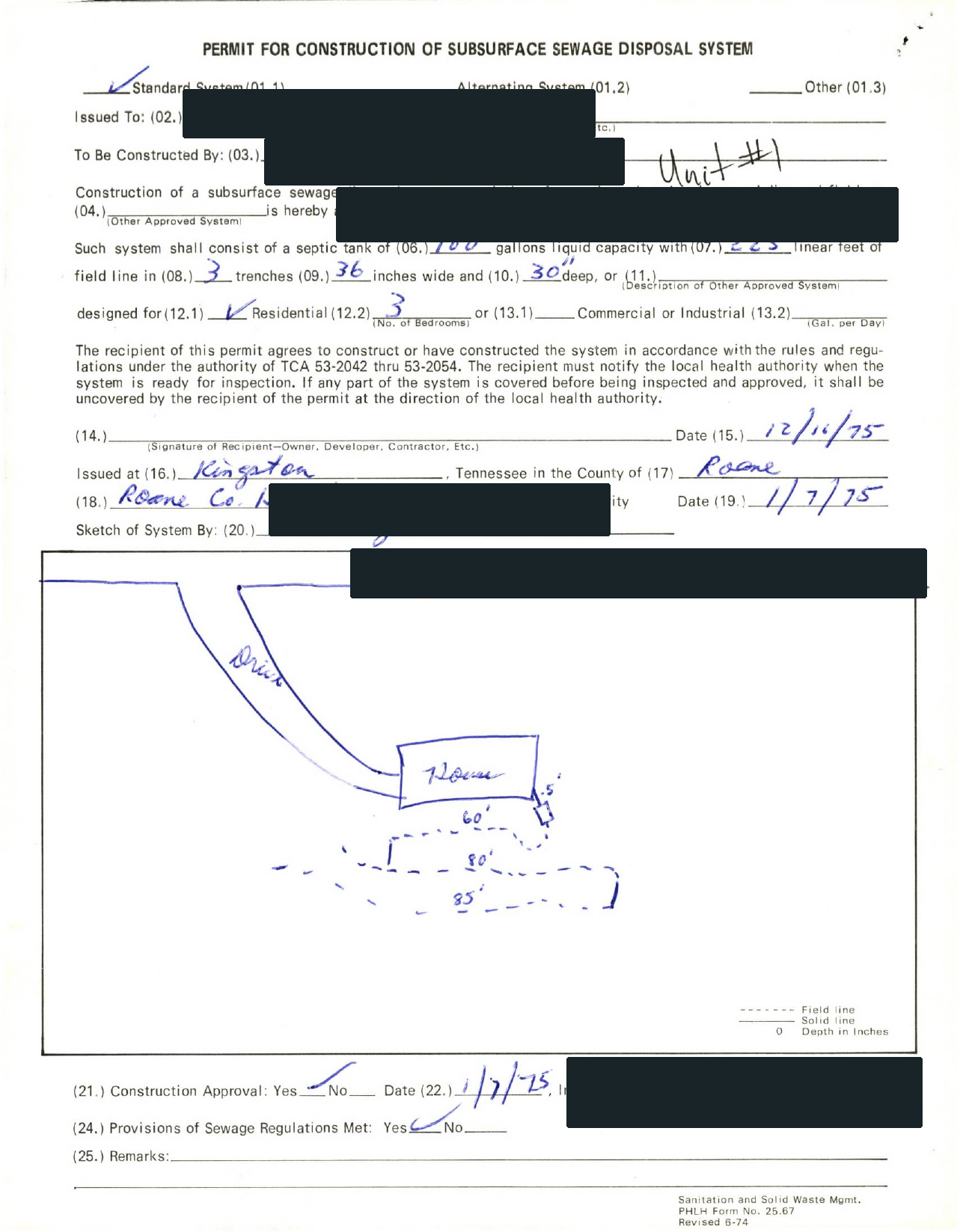
  • The septic system construction permit and any repair permit tied to the current system.
  • Any inspection letter documenting the status of the existing septic system for sale, mortgage, or subdivision use.
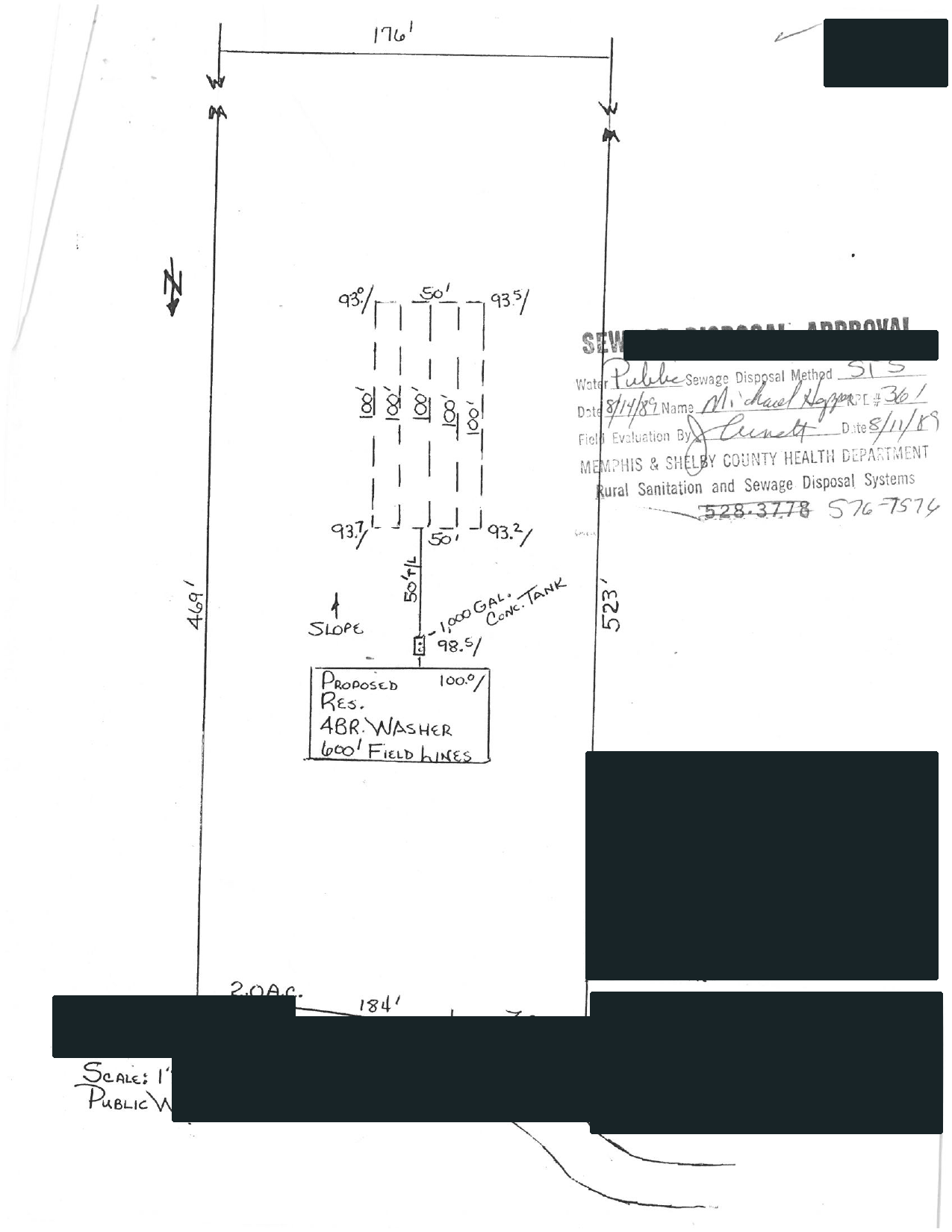
  • Any sketch, soils map, or site file already attached to the permit record.

What makes the file less trustworthy in Tennessee

State-level checks.

  • If the homeowner has not confirmed whether the parcel is handled by a contract county or a TDEC regional office, the low end is still a planning scenario.
  • If the job actually needs a repair permit for a failing system, the project can be wider than a simple replacement quote suggests.
  • If soil or site conditions push the job toward an alternative system, the replacement path can widen quickly.
  • Tennessee looks statewide through TDEC, but the practical homeowner path changes quickly once you know whether the parcel is handled by a contract county or a TDEC regional contact and whether the permit file is complete.

Page-specific checks.

  • If the homeowner has not confirmed whether the parcel is handled by a contract county or a TDEC regional office, the low end is still a planning scenario.
  • If the job actually needs a repair permit for a failing system, the project can be wider than a simple replacement quote suggests.
  • If soil or site conditions push the job toward an alternative system, the replacement path can widen quickly.

Permit timeline watch

Tennessee timing often turns on how quickly the permit file is pulled, whether an inspection letter is needed for a transaction, and whether the job stays conventional or widens into an alternative-system conversation.

When the missing file becomes a deal problem

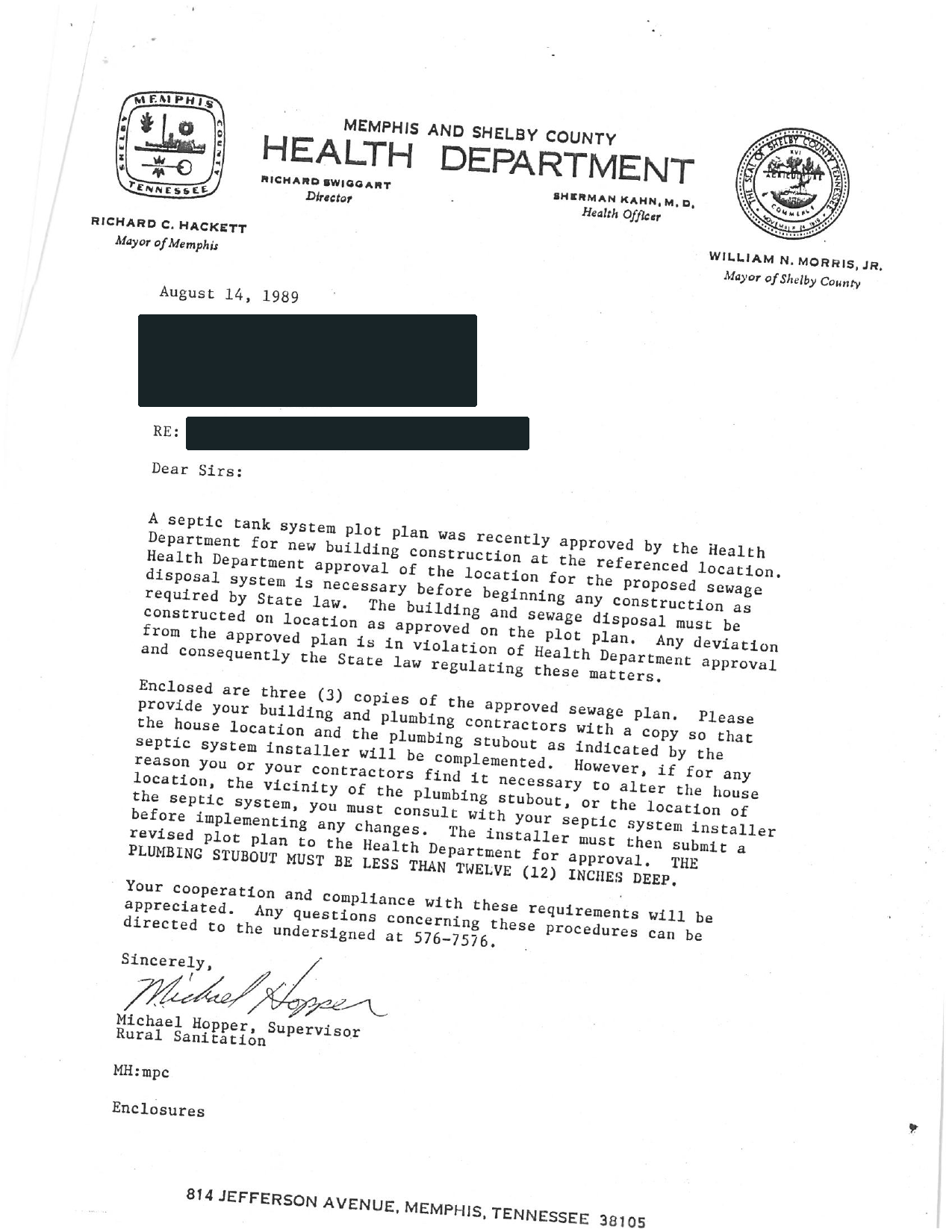
Buyers should ask for the permit file and any inspection letter early because Tennessee inspection letters are often used for sales and mortgages and can reveal whether the existing system story is thinner than the listing suggests.

Maintenance / inspection note

Tennessee's current source set is strongest on permit timing, repair permits, and inspection-letter workflow, not on one simple statewide pumping cadence.

Special state wrinkle

Tennessee's main wrinkle is the split between contract-county routing and TDEC contacts plus the inspection-letter path that often matters before replacement or buyer decisions.

Bring this into the next records call

  • The septic system construction permit and any repair permit tied to the current system.
  • Any inspection letter documenting the status of the existing septic system for sale, mortgage, or subdivision use.
  • Any sketch, soils map, or site file already attached to the permit record.
  • A short note showing whether the file request is for buyer diligence, permit cleanup, replacement planning, or service-history review.
Official-source context

Tennessee Department of Environment and Conservation and related official materials support this page. Final design, permit path, and approval still need local verification.

FAQ

Tennessee questions this page should answer before a quote request.

What is the first Tennessee records step a homeowner should take?

Start with the TDEC regional contact or contract county office and pull the permit file and inspection letter before treating the project as routine.

Why does this Tennessee page keep mentioning permit file and inspection letter?

Because the permit file and inspection letter usually tells you whether the property still fits the simple story the owner, buyer, or contractor is using.

Next best action

Estimate before the permit-file pull

Tennessee quote conversations get more real once you know whether the parcel runs through a contract county or TDEC contact and whether a repair permit or inspection letter is already in the file. The calculator result already shows the likely tank band, system class, cost range, and state-specific rule context. Use the file, permit, or authority path above before you move into quote mode.

Pull first. Parcel identifier, address, owner name, or permit number needed to pull the county file.

Hold quote until. Do not move into quote mode while the parcel, GIS, or records-request trail is still missing.